Bikrampur is better known for its kings, monasteries and scientists, but a striking number of Bengali writers also came from families rooted in the region. Some were born there; others grew up elsewhere but carried the family name of a Bikrampur village. Here are five of them.
Buddhadeva Bose (1908 to 1974)
Born in Comilla, then part of Tipperah district, Bose belonged to a family whose ancestral home was in Malkhanagar, now in Sirajdikhan upazila. He was one of the poets who led Bengali verse into modernism after Tagore. In October 1935 he founded the poetry magazine Kavita, which ran until 1961, and in 1956 he set up the Department of Comparative Literature at Jadavpur University in Calcutta. He received the Sahitya Akademi Award in 1967 and the Padma Bhushan in 1970.
Manik Bandopadhyay (1908 to 1956)
Born Prabodhkumar Bandyopadhyay in Dumka, Manik came from a family whose ancestral home was the village of Malapadiya in Bikrampur. In a career of about 28 years he wrote 38 novels and some 306 short stories. Padma Nadir Majhi (1936), about the fishermen of the Padma, and Putul Nacher Itikatha (1936) remain among the most read novels in Bengali.
Samaresh Basu (1924 to 1988)
Born in Bikrampur, Basu worked in a factory at Ichapore and was active in trade union politics before turning to full-time writing. He wrote more than 100 novels and 200 short stories, some under the pen name Kalkut, and created the boy detective Gogol for younger readers. His novel Shamba won the Sahitya Akademi Award in 1980.
Humayun Azad (1947 to 2004)
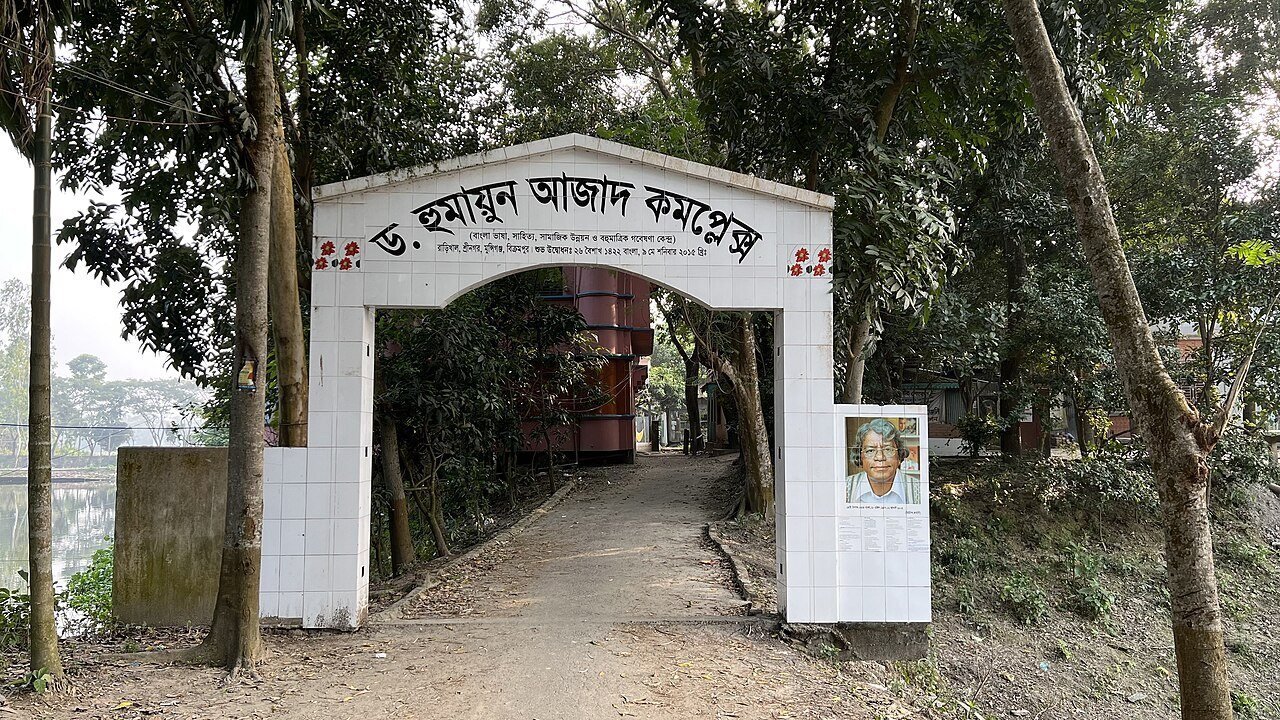
Born Humayun Kabir in Rarhikhal, in today's Sreenagar upazila, Azad was a linguist with a doctorate from the University of Edinburgh and a professor of Bangla at the University of Dhaka. He wrote more than 70 books of poetry, fiction, criticism and linguistics, including the feminist study Naree. He received the Bangla Academy Literary Award in 1986 and, after his death in 2004, the Ekushey Padak in 2012. He is buried in his home village.
Imdadul Haq Milan (born 1955)
Born in Bikrampur in September 1955 and raised partly in Gendaria in Dhaka, Milan has written more than 200 books, from popular romances to novels about the Liberation War such as Ekattor O Ekjon Maa. He received the Bangla Academy Literary Award in 1992 and the Ekushey Padak in 2019.
Together these writers show how a district of rivers and villages fed the literary life of both Dhaka and Calcutta for more than a century.
Sources: en.wikipedia.org, en.wikipedia.org, en.wikipedia.org, en.wikipedia.org