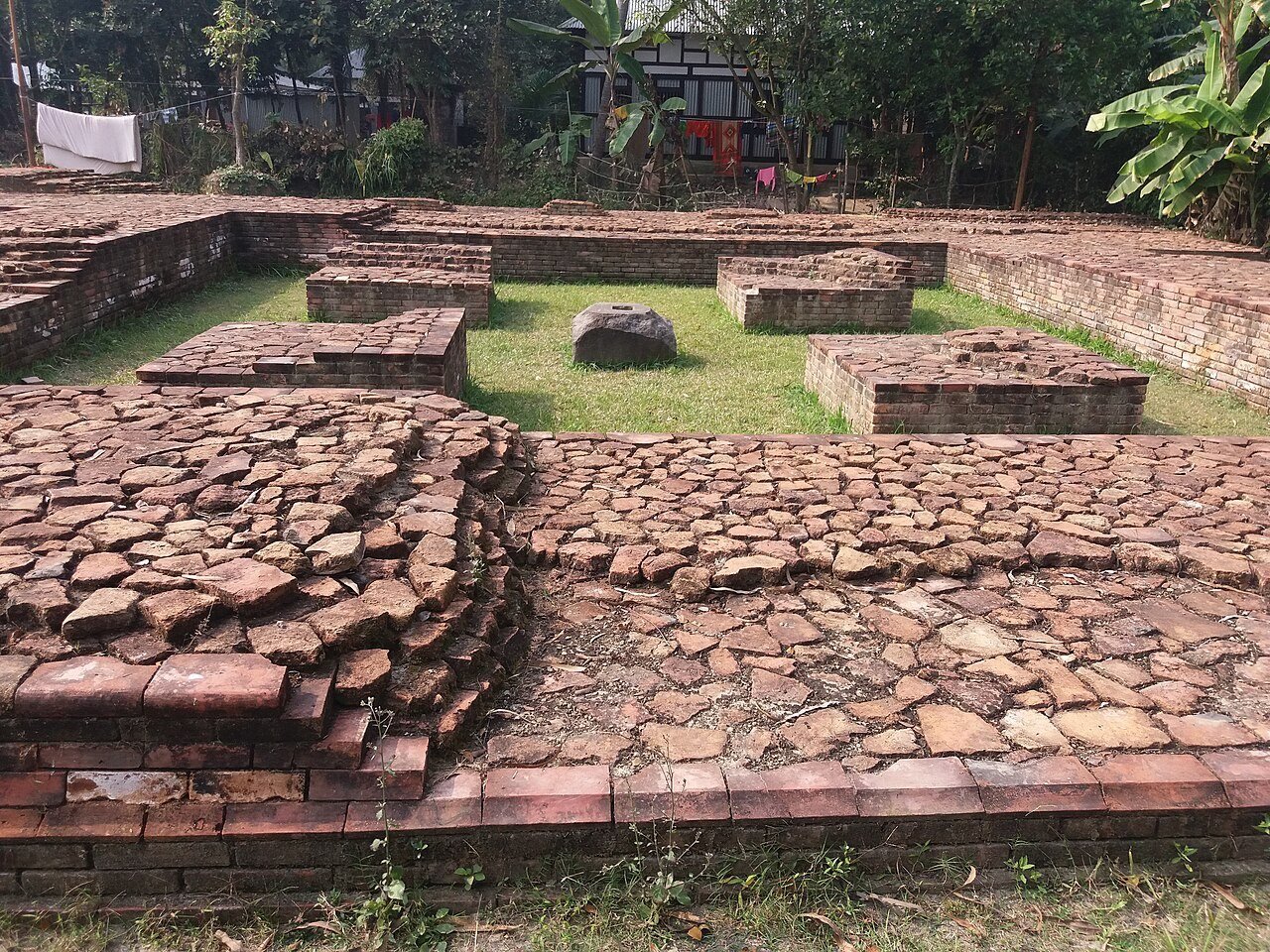
In the middle of Munshiganj town stands one of the best preserved Mughal forts in Bangladesh. Idrakpur Fort was built of brick at a time when the Mughal capital of Bengal, Dhaka, faced repeated raids by Magh (Arakanese) and Portuguese pirates sailing up the rivers from the Bay of Bengal.
Who built it, and when
The fort is usually credited to Mir Jumla II, the Mughal subahdar (governor) of Bengal, and dated to about 1660. The dating rests on the style of the building and on the history of Mir Jumla's campaigns rather than on a surviving foundation inscription, which is why reference works describe it as "probably" his work. It is one of three river forts, with Hajiganj and Sonakanda in Narayanganj, that together are thought to have formed a defensive triangle on the approaches to Dhaka.
At that time the fort stood at the meeting point of the Ichhamati and Meghna rivers. The Ichhamati has since dried up, so the fort now sits inland, surrounded by the growing town. It is also described as having served as a base for a Mughal river fleet.
What visitors see
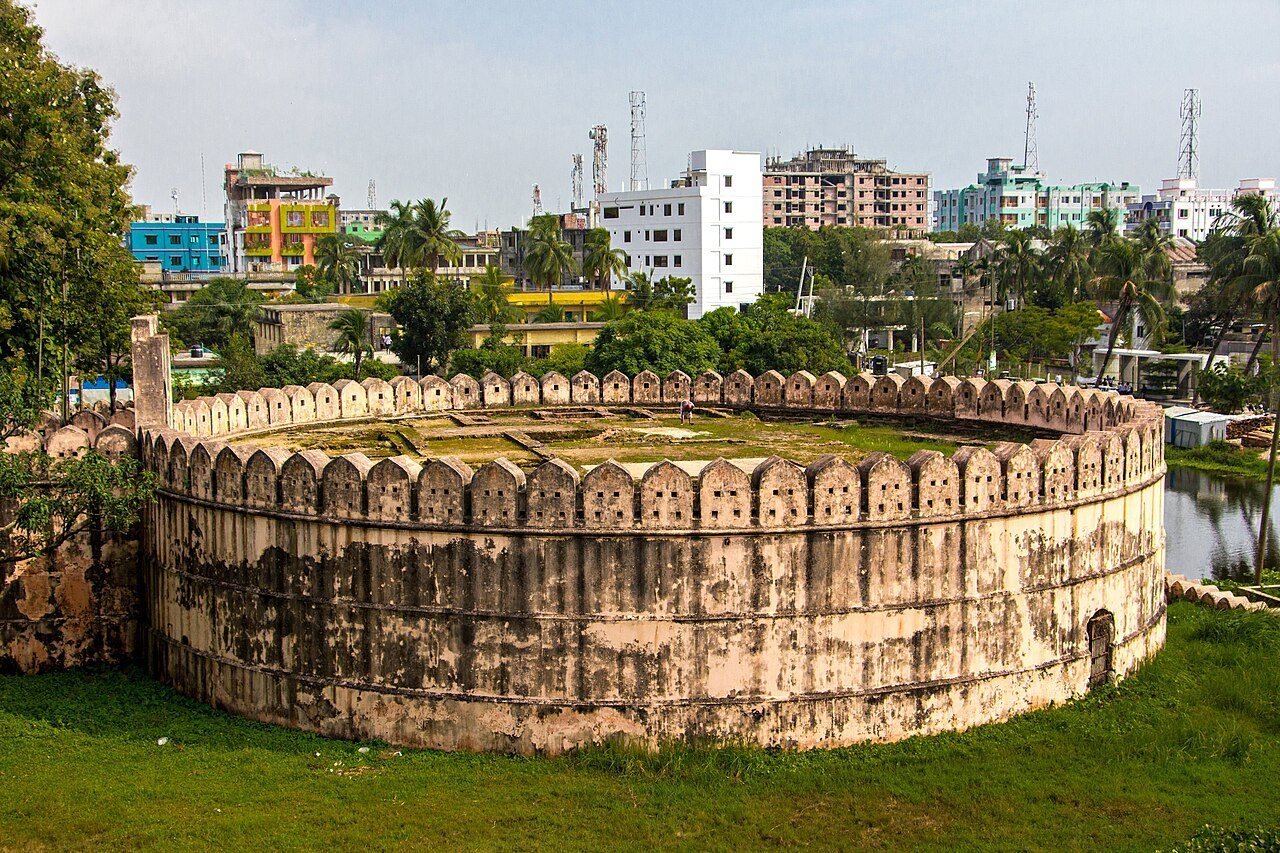
The fort measures about 86.87 metres from north to south and 59.60 metres across. It has two parts. The larger enclosure is surrounded by a curtain wall with rounded bastions at the corners. The smaller part is dominated by a great round drum, about 32.5 metres in diameter and 9.14 metres high, on which guns could be mounted to cover the river. The walls are topped with merlons with openings for musket fire, and a staircase leads down into an underground chamber.
Uses over time and protection
After the Mughal period the fort was put to other uses. It is recorded as having served as a jail, while the residence of the district's Deputy Commissioner was built on top of the drum. Today the site is protected by the Department of Archaeology and is open to the public.
The fort has survived more than three and a half centuries largely because the town grew around it rather than over it.
Sources: en.wikipedia.org, en.banglapedia.org