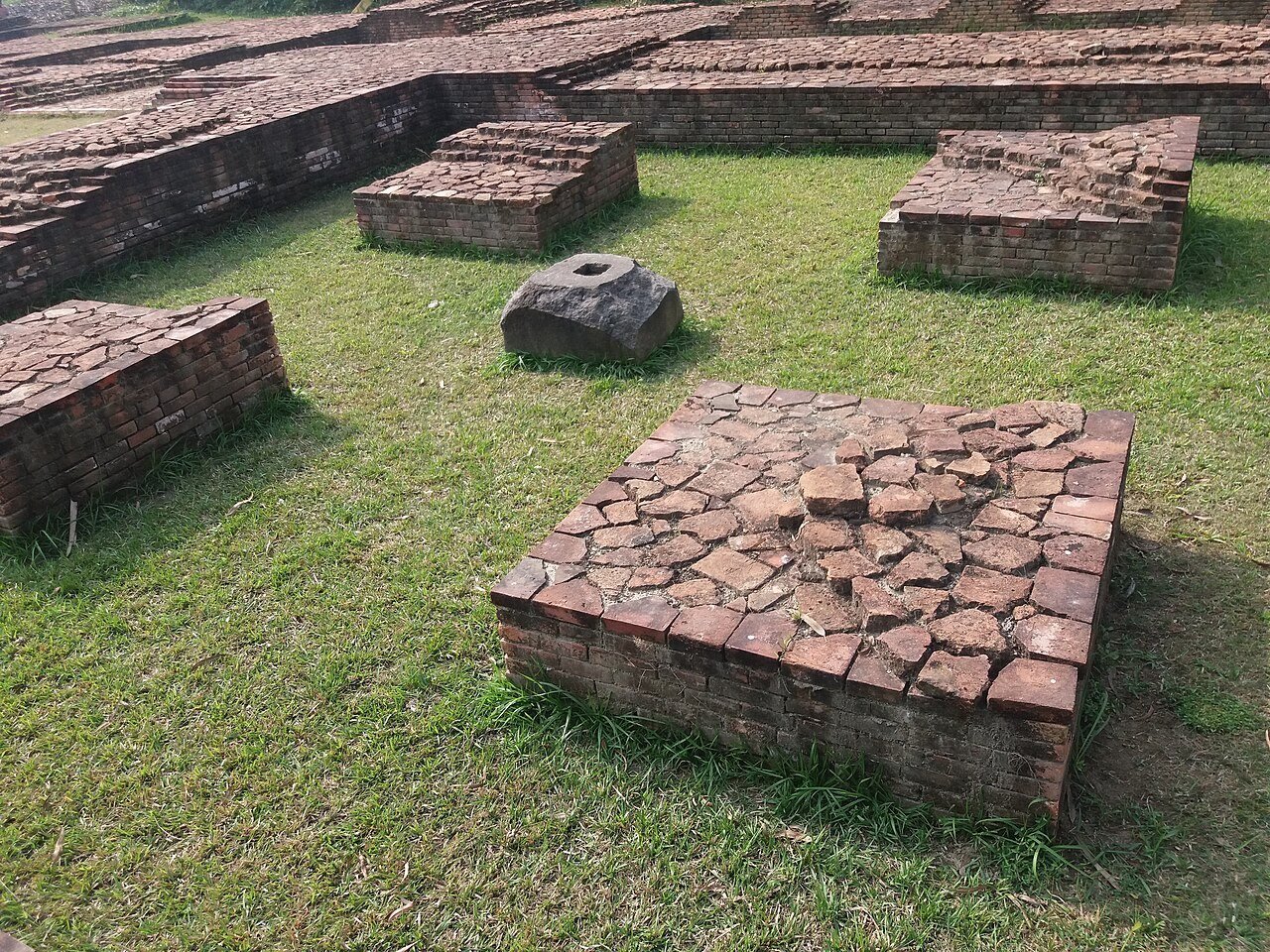
For centuries the people of Bikrampur heard that their land had once been a seat of kings and a centre of Buddhist learning. Since 2010, archaeologists have been showing it. Excavations led by the archaeology department of Jahangirnagar University with the local Agrasar Bikrampur Foundation have uncovered a monastery at Raghurampur in Munshiganj Sadar and a large Buddhist stupa complex at Nateshwar in Tongibari.
The finds are significant. In March 2013 the team announced the remains of a vihara at Raghurampur, with monks' cells and more than a hundred sculptures and objects, in work financed by the Ministry of Cultural Affairs. At Nateshwar, digging that began in 2012 has exposed stupas, brick pathways, drains and monastery rooms. Archaeologists from Hunan Province in China have worked alongside the Bangladeshi team. Radiocarbon dates from Nateshwar fall between about 780 and 1223 CE, placing the settlement in the era of Atish Dipankar Srijnan, who was born around 982 at Vajrayogini, a short distance away.
Discovery is only the first step
Exposed brick is fragile. Once a site is opened, rain, waterlogging, plant roots, careless visitors and brick theft can do in a few years what centuries underground did not. Munshiganj is low land that floods in the monsoon. Without drainage, cover over the most sensitive areas and regular conservation, the walls uncovered over the past decade will slowly crumble.
Success brings its own pressure. The government has said it wants Nateshwar developed as a place for visitors, and an archaeological park has been planned. That is welcome, but tourism must follow conservation, not the other way round. Concrete walkways laid across unexcavated ground, food stalls beside the stupas or new buildings on nearby mounds could destroy evidence that nobody has yet studied.
Keep the community at the centre
The strength of the Bikrampur excavations so far has been local ownership. A community foundation, a public university, a ministry and a foreign research partner have worked together, and the finds are kept at the Bikrampur Museum. That model should be strengthened, not pushed aside, as the sites enter a new phase.
What we suggest
- Legal protection first. The Department of Archaeology should make sure the excavated sites and the surrounding mounds are formally protected under the Antiquities Act, with boundaries marked on the ground and controls on construction nearby.
- A conservation plan before a tourism plan. Each site needs a published conservation and drainage plan, prepared with specialists, before visitor facilities are built.
- Publish the science. Full excavation reports, in Bangla and English, should be made public so that scholars, students and residents can learn from the work.
- Train local guardians. Young people from Tongibari and Rampal can be trained as site wardens and guides, giving the community a direct stake in protection.
- Steady funding. People of Bikrampur abroad could support a conservation endowment through the museum and its partners, with annual public accounts.
Atish Dipankar travelled to Tibet in 1040 and is still honoured across the Buddhist world. The ground of his homeland is now being read again, layer by layer. It deserves the same patience and care that went into uncovering it.
Sources: en.wikipedia.org, en.wikipedia.org, en.wikipedia.org, archaeology.gov.bd