Munshiganj has done well in education. In the 2022 census the district recorded a literacy rate of 77.9 percent, above the national average. Many families have spent heavily to send their children to college and university. But a degree is no longer a guarantee of work.
The Bangladesh Bureau of Statistics' Labour Force Survey 2023 counted about 1.94 million unemployed young people aged 15 to 29, a youth unemployment rate of 7.2 percent. Nearly a third of these jobless young people had completed tertiary education. The same survey found that 18.9 percent of young people were not in education, employment or training, with the share higher among young women than young men.
These figures point to a gap between what young people learn and what employers, at home and abroad, will pay for. Practical digital skills are one of the clearest ways to narrow that gap.
Beyond basic computer classes
By digital skills we do not mean only typing or a short course in office software. We mean skills that people pay for: bookkeeping with accounting software, data entry and data cleaning, graphic design, video editing, web development, online marketing for local shops, customer support, basic cybersecurity, and the careful use of artificial intelligence tools. These can be learned in months, practised from a home in Sreenagar or Sirajdikhan, and sold to clients in Dhaka or overseas.
Too many training programmes end with a certificate and no job. What separates success from failure is usually practice on real projects, a mentor who answers questions, and a first paid assignment.
A role for the diaspora
Bikrampur has an unusual advantage. Many people of Bikrampur origin work in technology, finance, health and engineering in the United States, the United Kingdom and elsewhere. Even an hour a month of mentoring from these professionals could change the path of a young person in Munshiganj. Businesses run by the diaspora can also give first contracts to trained young people at home, with fair pay and clear standards.
What we suggest
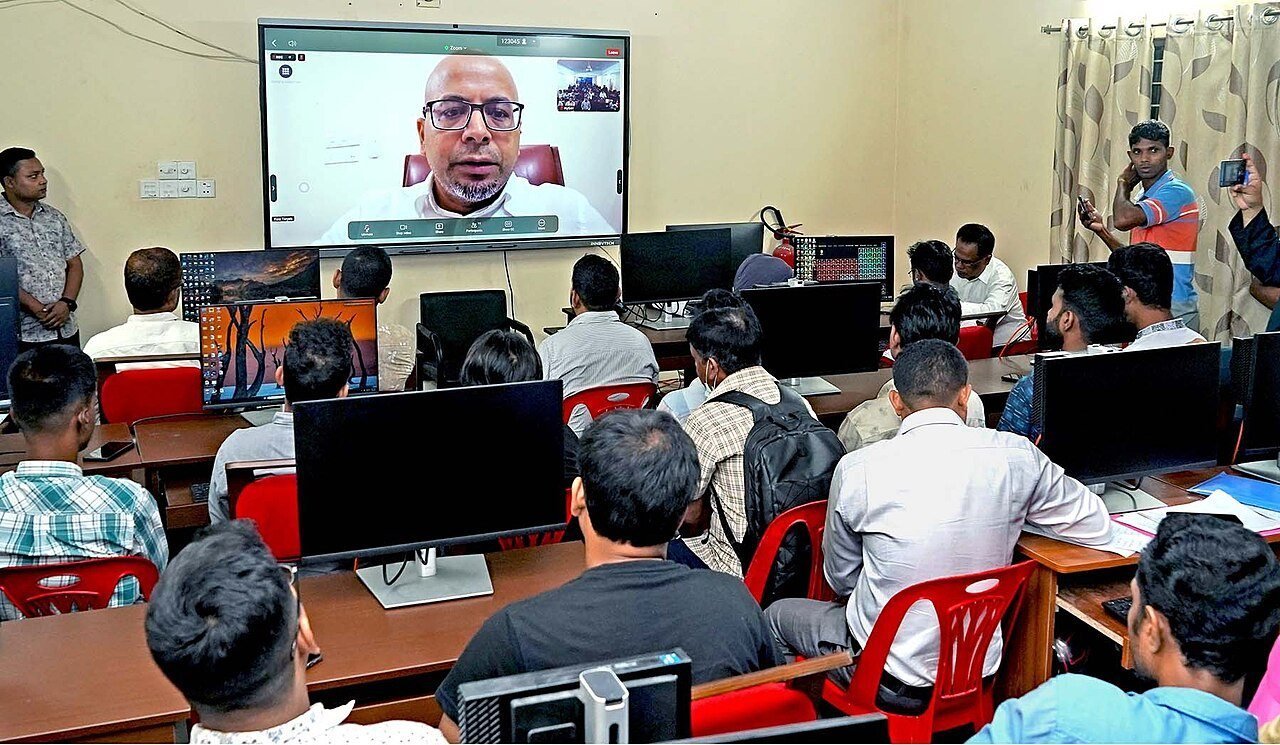
- Use what already exists. Schools, colleges and union digital centres in Munshiganj already have computers and connections. Opening them in the evenings and at weekends for supervised practice costs little.
- Train for real demand. Courses should be designed with local employers, online clients and diaspora businesses, and judged by how many trainees are earning within six months.
- Bring young women in. Training held close to home, at safe hours and with women trainers where possible, will help close the gap the survey found.
- Teach online safety. Every course should cover scams, account security and personal data protection, because young freelancers are frequent targets.
- Build a mentor network. Diaspora associations can match professionals abroad with small groups of learners for regular online sessions.
Bikrampur once drew scholars from far beyond Bengal to its monasteries. Its young people today do not need to leave home to learn and earn. With practical skills and steady mentoring, they can compete for work anywhere in the world from where they already live.
Sources: bbs.gov.bd, en.wikipedia.org